

Contents
- What Are BOD and COD?
- Why Controlling BOD/COD Matters
- Main Causes of Elevated BOD
- How to Calculate BOD Removal Efficiency
- Monitoring & Compliance
- Strategies to Reduce BOD
1. What Are BOD and COD?
Chemical Oxygen Demand (COD) is the amount of oxygen required to chemically oxidize all oxidizable substances in water (not limited to biodegradable organics). Biochemical Oxygen Demand (BOD) is the oxygen consumed by aerobic microorganisms while degrading biodegradable organic matter in water.
High BOD indicates a large load of biodegradable organics. If discharged without adequate treatment, the receiving water’s dissolved oxygen (DO) can be depleted, harming aquatic ecosystems.
2. Why Controlling BOD/COD Matters

2.1 Environmental protection
Excessive BOD rapidly consumes DO, leading to fish kills, habitat loss, and destabilized food webs.
2.2 Regulatory compliance
Most jurisdictions set numeric BOD/COD limits at outfalls. Routine monitoring and records reduce the risk of exceedances, fines, and legal liability.
2.3 Public health
Lower BOD generally correlates with improved effluent quality, reducing risks of waterborne disease.
2.4 Asset integrity
High organic loading and associated CO2 generation can increase corrosivity, potentially damaging pipes and equipment.
3. Main Causes of Elevated BOD
3.1 Factors influencing BOD
- Organic type & concentration: more readily biodegradable organics → higher BOD.
- Temperature & pH: microbial activity depends on suitable ranges.
- Toxicants: heavy metals/biocides suppress microbes and can distort BOD tests.
- Macro-nutrients (N, P): may stimulate microbial growth and drive BOD up.
3.2 Typical sources
- Industrial discharges (chemical, textile, paper, etc.).
- Landfill leachate rich in organics.
- Food & beverage wastewater (breweries, dairies, processors).
- Domestic sewage with high organic content.
- Agricultural runoff (fertilizers, manure).
4. How to Calculate BOD Removal Efficiency

Formula
BOD Removal Efficiency (%) = ((Influent BOD - Effluent BOD) / Influent BOD) × 100Parameter definitions
Influent BOD: untreated wastewater BOD entering the plant (mg/L).
Effluent BOD: treated water BOD after the process (mg/L).
Example
Influent BOD = 300 mg/L
Effluent BOD = 20 mg/L

BOD Removal Efficiency = ((300 - 20) / 300) × 100 = 93.3%
Use cases: assess ASP/DAF performance, verify permit compliance, and support audits or environmental reporting.
5. Monitoring & Compliance
- Sampling & testing: follow standard methods for BOD/COD; maintain QA/QC and proper holding times.
- Online sensors: use DO, pH, temperature, and turbidity/MLSS probes to enable real-time control.
- Data management: track trends (influent load, EQ tank levels, aeration rates) to catch anomalies early.
- Reporting & SOPs: keep calibration logs, jar-test records, chemical dosing SOPs, and operator checklists.
6. Strategies to Reduce BOD
6.1 Start with solids control (TSS)
TSS and BOD are closely linked. Removing suspended solids early reduces downstream oxygen demand and stabilizes biology.
- Mechanical devices: bar screens, rotary strainers, primary clarification; keep devices well-maintained to prevent blinding.
- Chemical aids: coagulants/polymers to agglomerate fine particles that otherwise elevate BOD.
6.2 Flow equalization (EQ tank)
Right-sized EQ dampens hydraulic and organic load swings, improving aeration control and biological stability.
- Select volume based on influent variability and any upstream chemical additions.
- Install level monitoring and mixing to prevent septicity.
6.3 Aeration & Activated Sludge Process (ASP)
Aeration is one of the most effective levers for BOD reduction in biological treatment.
- Maintain adequate DO (typically 1.5–3.0 mg/L in aeration basins).
- Use fine-bubble diffusers or efficient blowers; adjust air based on load and temperature.
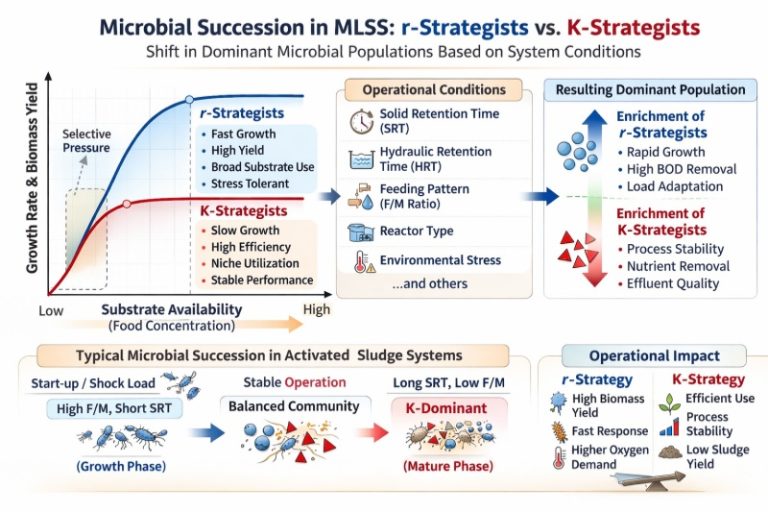
- Control SRT/MLSS and return activated sludge (RAS) rates to retain healthy biomass.
6.4 Coagulation & flocculation
Improves removal of colloids and residual organics, complementing ASP and clarification.
- Coagulants: aluminum sulfate (alum), ferric/ferrous salts.
- Polymers: optimize type/dose via jar tests; control pH for best performance.
6.5 DAF (Dissolved Air Flotation)
Effective for removing FOG and fine suspended solids that drive BOD.
- Consider self-cleaning features to reduce downtime.
- Optimize injection points for coagulant/polymer and whitewater recirculation.
6.6 Temperature & nutrients
- Moderately lower wastewater temperature can increase DO and support microbes (within biological limits).
- Maintain balanced N/P ratios for stable biomass; avoid over- or under-feeding nutrients.
6.7 Summary table
| Category | Strategy | Description |
|---|---|---|
| Physical | Remove TSS early | Screens, sedimentation, rotary strainers to cut solids and indirectly reduce BOD. |
| Physical | Properly size EQ tank | Buffers flow/load fluctuations; stabilizes aeration and biology. |
| Physical | Efficient DAF | Targets oils and fine solids; improves solid–liquid separation. |
| Physical | Temperature control | Moderate cooling raises DO and aids microbial activity (within process limits). |
| Chemical | Coagulation & flocculation | Alum/ferric and polymers to aggregate organics into removable flocs. |
| Chemical | Automated dosing | Flow-paced, feedback-controlled dosing of liquid reagents improves consistency. |
| Chemical | pH adjustment | Operate within optimal pH for coagulants/polymers and biological processes. |
| Biological | Activated Sludge (ASP) | Maintain DO, SRT, MLSS, and RAS for robust biodegradation of organics. |
| Biological | Enhanced aeration | Fine-bubble diffusers/blowers matched to real-time oxygen demand. |
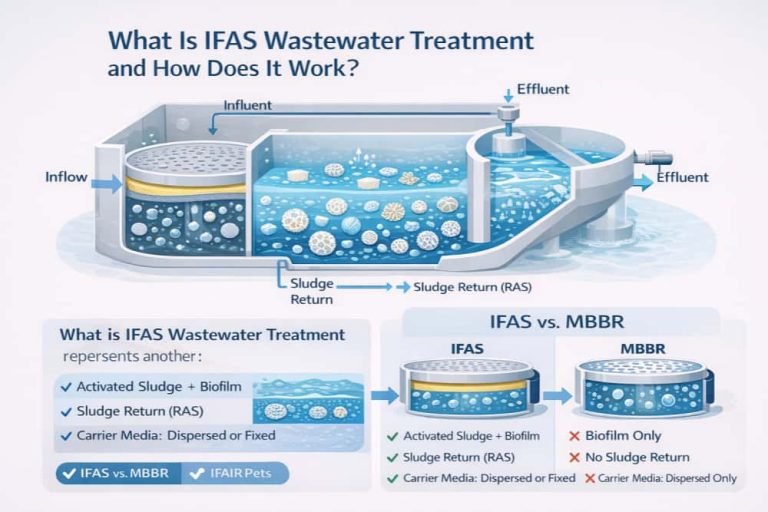
| Biological | MBBR | Carrier media with biofilm to increase treatment surface and resilience. |
| System | Self-cleaning DAF | Prevents clogging; reduces manual cleaning workload. |
| System | Optimize injection points | Strategic coagulant/polymer ports maximize contact and separation. |
| System | Right-size equipment | DAF, blowers, and chemical feed sized for current and future loads. |
| O&M | Monitoring with sensors | Use DO, pH, temperature sensors for real-time adjustments. |
| O&M | Consult experts | Trace upstream sources; tailor chemistry and process to influent characteristics. |
| O&M | Routine optimization | Jar tests, sludge age control, and trend reviews to sustain performance. |
Conclusion
In summary, effective BOD reduction comes from doing the simple things well: remove suspended solids early,smooth hydraulic and organic swings with a right-sized EQ tank, keep biology well oxygenated and well managed,and polish with targeted coagulation/flocculation and DAF when needed. Validate performance with the BOD removalefficiency calculation and a small set of routine metrics (DO, pH, temperature, flow, MLSS/SRT). Plants that pairdisciplined monitoring with fit-for-purpose equipment consistently meet effluent limits, protect receiving waters,and operate more predictably over the long term.