

Nutrient pollution is a serious form of water pollution, primarily caused by excessive levels of nitrogen (N) and phosphorus (P) entering aquatic environments. When nutrient-rich wastewater is discharged without adequate treatment, it can trigger eutrophication, cause harmful algal blooms, decrease oxygen levels, and ultimately lead to biodiversity loss in freshwater and marine ecosystems.
Wastewater treatment plants play a critical role in reducing nutrient pollution. However, many industrial wastewater streams lack the optimal nutrient balance required for biological treatment. For treatment systems to work effectively, it is essential to understand the nutrient needs of microbial communities and manage nutrient dosing carefully—particularly in systems where the carbon:nitrogen:phosphorus (C:N:P) ratio deviates significantly from the recommended standard.
The Role of Nutrients in Wastewater Treatment
In aerobic biological wastewater treatment systems, microbial populations require a balanced supply of carbon (C), nitrogen (N), and phosphorus (P). The widely accepted standard ratio for nutrient balance is 100:5:1 (C:N:P), although in some cases, a 100:10:1 ratio may be used depending on microbial load and system dynamics.
Each of these nutrients plays a distinct role:
- Carbon (C): Serves as the primary energy source and structural material for microbial metabolism.
- Nitrogen (N): Essential for protein and enzyme synthesis.
- Phosphorus (P): Needed for energy transfer (ATP) and nucleic acid synthesis.
When this balance is disrupted, biological treatment performance declines, effluent quality worsens, and regulatory compliance becomes more difficult.
Imbalanced C:N:P Ratios in Industrial Wastewater
In many industrial settings, influent wastewater composition varies dramatically. For example:
- Pulp and paper mill effluent typically has high BOD levels (carbon-rich) but is deficient in nitrogen and phosphorus.
- Petrochemical wastewater may have adequate or excessive nitrogen levels but often lacks phosphorus.
These imbalances mean that microorganisms do not receive the necessary macronutrients to sustain biomass growth, form stable flocs, or efficiently degrade organic compounds.
Benefits of Nutrient Supplementation in Wastewater Treatment
Supplementing nutrients in industrial wastewater can be compared to fertilizing a biological ecosystem. When done correctly, nutrient dosing offers a wide range of benefits:
- Improved sludge settleability with a lower Sludge Volume Index (SVI).
- Enhanced removal of suspended solids, organics (BOD/COD), and nitrogen.
- Increased process stability, particularly during shock loads or temperature fluctuations.
- Stronger nitrification performance under low-temperature conditions.
- Lower operational and maintenance costs.
- Reduced need for costly chemical interventions.
- Improved compliance with discharge regulations.
- Flexibility to customize nutrient blends based on system requirements.
How Much Nitrogen and Phosphorus Should Be Added?
While the 100:5:1 C:N:P guideline is a useful starting point, actual nutrient requirements depend on the unique characteristics of the wastewater and microbial dynamics. In modern practice, nutrient dosing is better informed by residual nutrient measurements, rather than fixed input ratios.
Target residual concentrations often used to guide nutrient sufficiency are:
- Ammonia nitrogen (NH₄-N): 0.25 – 0.5 mg/L
- Orthophosphate (PO₄³⁻): 0.1 – 0.2 mg/L
Maintaining residuals within these ranges generally ensures a stable and effective microbial population.
Nutrients in the Pretreatment Stage
Even during the pretreatment phase, monitoring and adjusting nutrients can have a significant impact on downstream performance. Proper nutrient management in pretreatment leads to:
- Optimized chemical consumption by reducing overuse of flocculants or coagulants.
- Improved microbial activity and sludge formation at early stages.
- Faster detection of process upsets or loading anomalies.
- Enhanced prediction of final effluent quality and regulatory compliance.
Risks of Over-Reliance on Ammonia Residuals
Using ammonia residuals alone to control nitrogen dosing can be misleading.
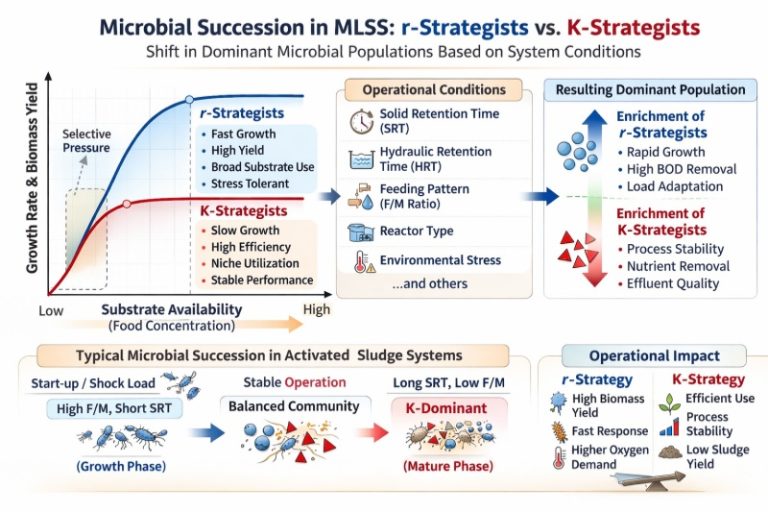
In oxygen-rich systems, ammonia encourages the growth of ammonia-oxidizing bacteria (AOB) and nitrite-oxidizing bacteria (NOB). These bacteria aggressively convert ammonia to nitrite and nitrate, driving residual ammonia concentrations below target levels. Operators, interpreting this as a nitrogen deficiency, may respond by adding more nitrogen.
This creates a counterproductive loop:
- More nitrogen is added than needed.
- More oxygen is required to oxidize the surplus ammonia.
- Operational costs rise due to excess nutrient use and energy demand.
A Smarter Solution: Microbial Community Analysis (MCA)
To break the “overdosing cycle”, advanced monitoring tools like Microbial Community Analysis (MCA) are highly valuable.
By using DNA sequencing technology, MCA can identify and quantify microbial populations such as:
- AOB/NOB: Responsible for nitrification
- PAO (Phosphorus-Accumulating Organisms): Can reduce orthophosphate levels without the need for added phosphorus
If a system has an overactive nitrifier or phosphate-accumulator population, reducing nutrient dosing—not increasing it—may be the better strategy.
MCA, combined with microscopic biomass evaluation, helps operators make data-driven adjustments and promotes sustainable nutrient use.
Selecting the Right Nutrient Products
Not all wastewater systems are the same. Nutrient dosing strategies must be tailored to:
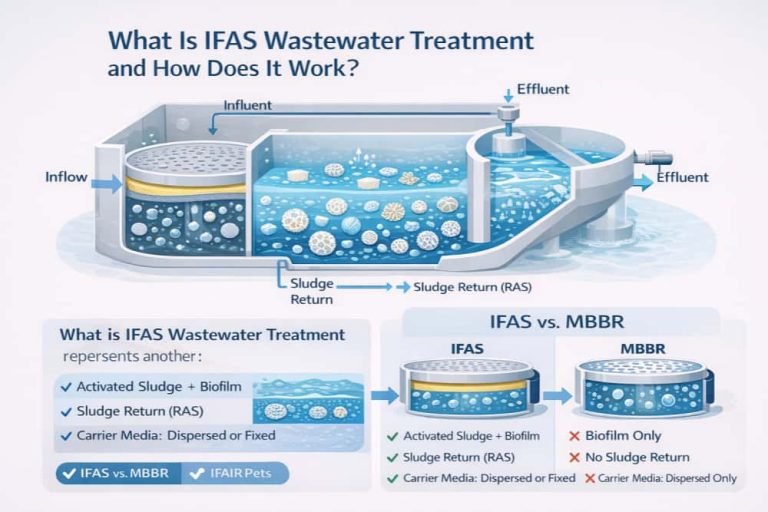
- Type of treatment process (e.g., activated sludge, MBBR, SBR)
- Flow rate and system size
- Actual vs. design loading conditions
- Existing chemical dosing infrastructure
- Treatment goals (e.g., nitrification, denitrification, phosphorus removal)
Custom nutrient blends—including urea-based nitrogen, phosphoric acid, or specialty micronutrients—can be formulated to meet these needs effectively.
Conclusion: Balance Over Quantity
Nutrients in wastewater are neither inherently good nor bad. What matters is achieving and maintaining the right balance.
By moving beyond the simplistic 100:5:1 ratio and embracing real-time monitoring, biological profiling, and smart dosing strategies, industrial facilities can:
- Enhance biological treatment performance
- Protect downstream ecosystems
- Reduce chemical and energy costs
- Maintain long-term operational stability
In short, smart nutrient management isn’t just about adding more—it’s about adding wisely.