

In the world of wastewater treatment, you may have come across the term “biological solids.” But what exactly does it mean? And why do we care so much about it? In this article, we’ll break it down in a clear, easy-to-understand way.
What Are Biological Solids?
Put simply, biological solids are the by-products produced when bacteria grow and work in a wastewater system.
In wastewater treatment, we use bacteria to “eat” the pollutants (mainly organic matter) in the water. As they consume food, they grow, reproduce, and generate waste — just like any living organism.
These biological solids include:
- Living bacteria (still active and treating the water)
- Dead bacteria (no longer functioning)
- Extracellular polymeric substances (EPS) – the sticky substances bacteria produce
- Other particles like fats, food debris, and inorganics that stick to the floc
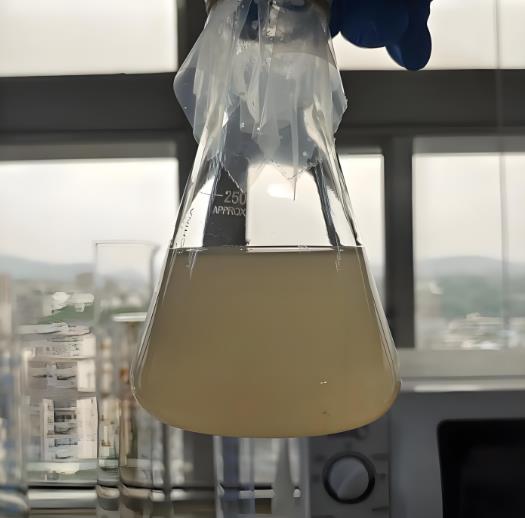
These all come together to form sludge, the dark, heavy material that settles at the bottom of tanks.
Why Do Biological Solids Matter?
Handling biological solids is one of the most expensive parts of wastewater treatment. This includes:
- Dewatering
- Transporting
- Disposing (e.g., landfilling or incineration)
So naturally, we want to minimize how much of it we produce.
How Can We Reduce Biological Solids?
Here are some proven strategies:
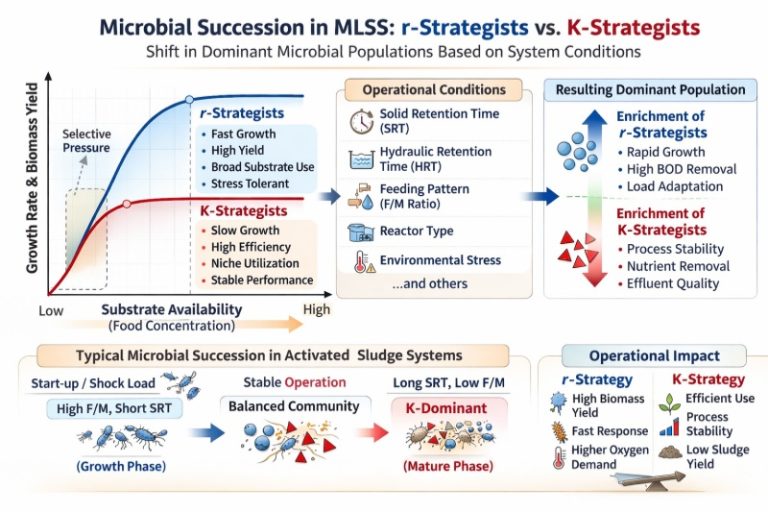
- Starve the bacteria (a little): If you limit their food, bacteria enter a phase called endogenous respiration, where they begin to break down their own cell material.
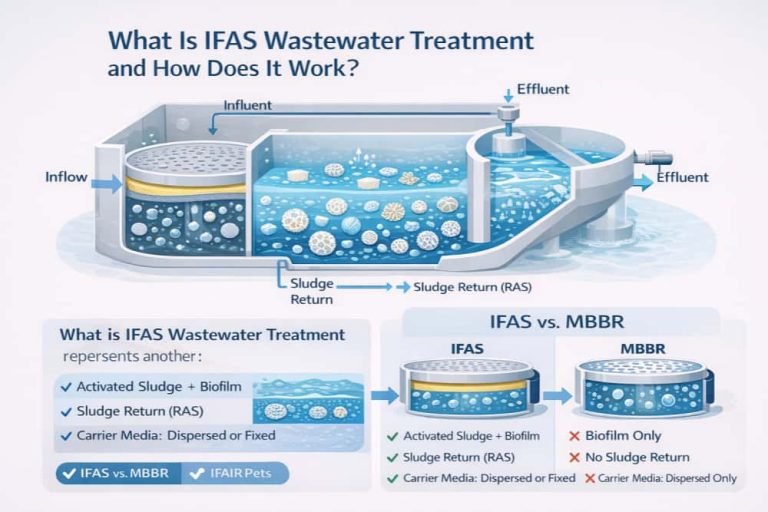
- Use biofilm technologies (like MBBR): Bacteria grow on carriers instead of floating freely, reducing solids going to the clarifier.
- Add helpful bugs or enzymes (bioaugmentation): Especially useful when influent contains fats or oils; helps reduce sludge indirectly.
Summary
Biological solids are an unavoidable part of wastewater treatment — they’re basically the “waste” made by your helpful bacteria workers. But with smart system design and process control, we can keep the solids under control and save a lot of money in the process.
In short: bacteria clean your water, but leave behind some trash — learn to manage that trash wisely.