


The microbial growth curve is a fundamental and highly significant concept in microbiology that describes the dynamic and continuous changesin microbial population density and activity over time. In the field of wastewater treatment, understanding and effectively applying this curve is crucial for optimizing biological treatment processes, improving pollutant removal efficiency, enhancing system reliability, and maintaining operational stability under varying environmental and influent conditions. By observing and analyzing the microbial growth curve, engineers and operators can make informed decisions regarding operational parameters, ensuring the treatment system achieves desired effluent quality consistently and sustainably.
1. Introduction to the Microbial Growth Curve
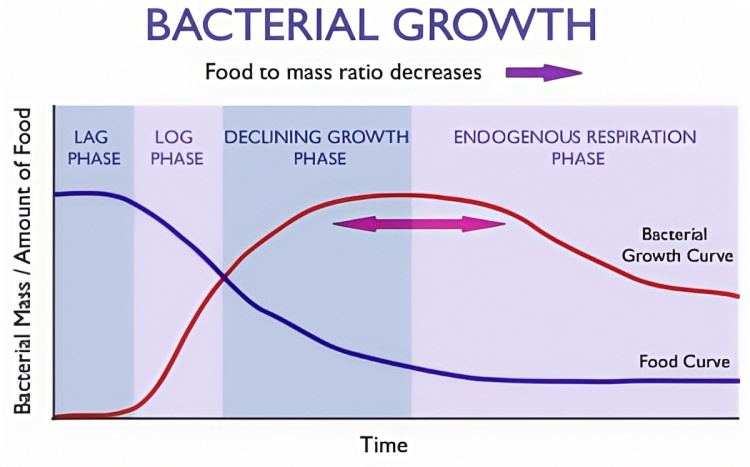
The microbial growth curve consists of four main and clearly identifiable phases, each of which represents specific physiological activityand population dynamics of microorganisms that are highly relevant to wastewater treatment:
- Lag Phase: During the lag phase, microorganisms adapt to new environmental conditions, activate enzyme systems,synthesize essential proteins, and adjust their metabolic pathways. This phase is critical because it determines how efficiently the microbial population will respond to available nutrients and environmental changes.
- Exponential Phase: In the exponential or log phase, microbes grow rapidly, consuming organic matter and essential nutrients at the highest rate. This phase is the period of maximum activity, where microbial populations double at a consistent rate, and pollutant degradation occurs efficiently. Operators closely monitor this phase to ensure optimal nutrient removal.
- Stationary Phase: Growth slows in the stationary phase as nutrients become depleted and waste products accumulate. Microbial populations stabilize, and a balance is achieved between cell division and cell death. This phase is often the desired operational range in activated sludge systems, as it supports floc formation and nutrient removal while minimizing washout risks.
- Decline Phase: In the decline phase, cell death exceeds growth due to nutrient limitations, accumulation of inhibitory substances, or other unfavorable conditions. Microbial populations decrease, some cells lyse, and nutrients may be recycled into the system. Proper management is required to avoid negative impacts on effluent quality during this phase.
2. Application in Wastewater Treatment
The microbial growth curve provides a comprehensive and practical theoretical basis for process control in various biological wastewater treatment systems, including but not limited to activated sludge reactors, biofilm-based systems, moving bed biofilm reactors (MBBR), and anaerobic digesters. Understanding microbial population dynamics allows operators to optimize operational parameters for improved system performance. Key applications of the microbial growth curve in wastewater treatment include:
- Optimizing Sludge Age and Retention Time: By carefully adjusting sludge age and solids retention time (SRT), microorganisms can be maintained in the exponential or early stationary phase, ensuring efficient organic matter degradation, floc formation, and stability of the microbial community over time.
- Nutrient Removal: The growth environment can be controlled to favor the development of nitrifying and denitrifying bacteria, as well as phosphate-accumulating organisms, enhancing the removal of nitrogen and phosphorus compounds. Targeting these microbial populations is essential for meeting increasingly stringent regulatory requirements for effluent quality.
- Process Monitoring: Observing microbial growth kinetics provides real-time indicators of system health and efficiency. Changes in growth rates can signal potential issues such as bulking, foaming, or nutrient deficiencies, allowing proactive adjustments to maintain system performance.
- Design and Modeling: Microbial growth curves are used to develop predictive models and simulations for treatment performance, enabling engineers to anticipate system responses under varying influent conditions, optimize aeration and recycling strategies, and plan for process upsets or seasonal variations.
3. Benefits and Challenges
Applying the microbial growth curve in wastewater treatment systems provides numerous benefits, including maximized treatment efficiency, enhanced stability of microbial communities, improved effluent quality, reduced energy consumption, and increased operational predictability. However, practical application also presents challenges, as real wastewater systems are highly complex and dynamic. Microbial growth may be influenced by multiple interdependent factors such as temperature fluctuations, pH variations, toxic compounds, variable influent characteristics, and hydraulic changes. Operators must carefully monitor and adjust system conditions to maintain microbial populations in the optimal growth range.
4. Conclusion
Understanding and effectively utilizing the microbial growth curve is essential for modern and efficient wastewater management. It provides a scientific foundation for designing, operating, and optimizing biological treatment facilities. By leveraging knowledge of microbial kinetics and population dynamics, treatment systems can achieve improved pollutant removal, enhanced stability, and long-term sustainability. Integration of microbial growth curve principles into daily operational practices supports informed decision-making, minimizes risks of process disruptions, and ensures compliance with environmental standards.
It is believed that this study paves a new avenue toward the development of advanced wastewater treatment strategies that integrate microbial ecology, process optimization, and sustainable environmental management for future wastewater facilities.